Aug 25, 2026

HOW TO CHOOSE GENTLE PRODUCTS FOR BABY SKIN
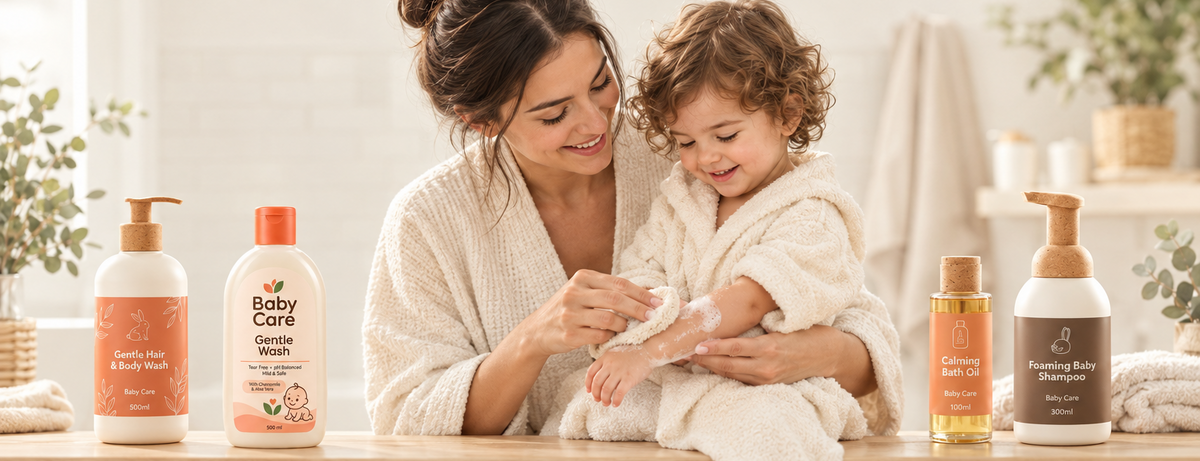
A baby's skin is delicate and needs thoughtful everyday care. From bath products and moisturizers to laundry essentials and wipes, the products that come into contact with your baby's skin should be selected carefully.
Choosing gentle baby products can help create a simple and comfortable skincare routine from the very beginning.
Look for Baby-Friendly Formulas
When shopping for baby skincare products, pay attention to the ingredients and product labels. Products made specifically for babies are generally designed with delicate skin in mind.
Parents may prefer simple formulas and avoid products containing unnecessary fragrances or harsh ingredients, especially if their baby has sensitive skin.
Choose a Gentle Baby Cleanser
Bath time should be relaxing rather than complicated. A gentle cleanser can help keep your baby's skin clean without making the routine difficult.
Use a small amount of product and avoid excessive washing, as frequent or harsh cleansing can leave delicate skin feeling dry.
Keep Skin Moisturized
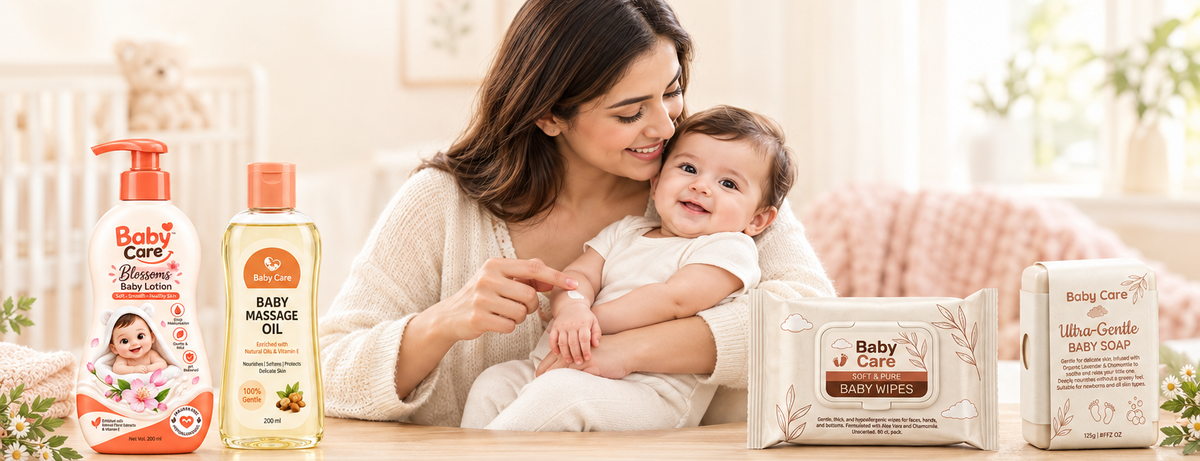
Baby skin can become dry, especially after bathing. A suitable baby moisturizer can help maintain the skin's natural softness.
Apply moisturizer gently after bathing, particularly to areas that tend to become dry. Always follow the product's instructions and stop using a product if irritation develops.
Don't Forget Baby Laundry
Baby clothes, towels, blankets, and bedding are in frequent contact with your baby's skin. Choosing a gentle laundry detergent can therefore be an important part of an overall baby-care routine.
Wash new clothes and fabrics before your baby uses them, and make sure they are thoroughly rinsed.
Be Careful With New Products
When introducing a new skincare product, use it carefully and observe how your baby's skin responds. If you notice redness, swelling, persistent dryness, or other unusual irritation, discontinue the product and seek appropriate medical advice.
Keep the Routine Simple
Babies do not need a large collection of skincare products. A few carefully selected essentials are often enough for everyday care.
A simple routine with gentle cleansing, moisturizing when needed, and clean comfortable clothing can help keep baby care manageable.
Final Thoughts
Choosing baby skincare products is about keeping things simple, gentle, and practical. Read labels carefully, choose products made for babies, and pay attention to how your baby's skin responds.
The right products can make everyday care easier while keeping your baby's comfort at the center of the routine.
Latest News & blogs

How to Choose Gentle Products for Baby Skin
A baby's skin is delicate and needs thoughtful everyday care. From bath products and moisturizers to laundry essentials and wipes, the products that come into contact with your baby's skin should be selected carefully.
Choosing gentle baby products can help create a simple and comfortable skincare routine from the very beginning.
Look for Baby-Friendly Formulas
When shopping for baby skincare products, pay attention to the ingredients and product labels. Products made specifically for babies are generally designed with delicate skin in mind.
Parents may prefer simple formulas and avoid products containing unnecessary fragrances or harsh ingredients, especially if their baby has sensitive skin.
Choose a Gentle Baby Cleanser
Bath time should be relaxing rather than complicated. A gentle cleanser can help keep your baby's skin clean without making the routine difficult.
Use a small amount of product and avoid excessive washing, as frequent or harsh cleansing can leave delicate skin feeling dry.
Keep Skin Moisturized
Baby skin can become dry, especially after bathing. A suitable baby moisturizer can help maintain the skin's natural softness.
Apply moisturizer gently after bathing, particularly to areas that tend to become dry. Always follow the product's instructions and stop using a product if irritation develops.
Don't Forget Baby Laundry
Baby clothes, towels, blankets, and bedding are in frequent contact with your baby's skin. Choosing a gentle laundry detergent can therefore be an important part of an overall baby-care routine.
Wash new clothes and fabrics before your baby uses them, and make sure they are thoroughly rinsed.
Be Careful With New Products
When introducing a new skincare product, use it carefully and observe how your baby's skin responds. If you notice redness, swelling, persistent dryness, or other unusual irritation, discontinue the product and seek appropriate medical advice.
Keep the Routine Simple
Babies do not need a large collection of skincare products. A few carefully selected essentials are often enough for everyday care.
A simple routine with gentle cleansing, moisturizing when needed, and clean comfortable clothing can help keep baby care manageable.
Final Thoughts
Choosing baby skincare products is about keeping things simple, gentle, and practical. Read labels carefully, choose products made for babies, and pay attention to how your baby's skin responds.
The right products can make everyday care easier while keeping your baby's comfort at the center of the routine.

Baby Essentials Every New Parent Needs
Preparing for a baby is exciting, but knowing what you actually need can sometimes feel overwhelming. From feeding and bathing to sleeping and everyday care, having the right baby products can make those first few months much easier and more comfortable.
The key is to focus on practical essentials that support your baby’s daily needs while making life easier for parents.
Baby Clothing
Newborns need soft, comfortable clothing that is gentle on delicate skin. Choose breathable fabrics and simple designs that make changing your baby easy. Bodysuits, sleepsuits, soft socks, and comfortable blankets are useful everyday essentials.
Avoid clothing with rough materials or uncomfortable details that may irritate sensitive skin.
Bath & Baby Care
Bath time is an important part of a baby's routine. Gentle baby wash, soft towels, washcloths, and suitable moisturizers can help make bath time comfortable.
When choosing baby care products, look for gentle formulas designed specifically for delicate baby skin. Keeping products simple can help make everyday care easier.
Feeding Essentials
Whether your baby is breastfed or bottle-fed, practical feeding accessories can make feeding time more convenient. Bibs, bottles, bottle brushes, burp cloths, and feeding storage products are useful additions to your baby-care collection.
Keeping feeding essentials clean and organized also helps parents maintain a comfortable routine.
Sleep Essentials
A comfortable sleep environment is important for babies. Soft bedding, suitable sleepwear, and a consistent bedtime routine can help create a calm atmosphere.
Parents should always follow safe-sleep recommendations and choose products that are appropriate for their baby's age.
Everyday Accessories
Small products can make a surprisingly big difference during the day. Diaper bags, changing mats, baby wipes, bibs, pacifiers, and storage organizers can help parents stay prepared at home or while traveling.
Instead of buying everything at once, start with the essentials and add products as your baby's needs change.
Final Thoughts
Choosing baby products does not have to be complicated. Focus on products that are comfortable, practical, gentle, and suitable for everyday use.
With the right essentials, parents can spend less time worrying about what they need and more time enjoying those precious moments with their little one.

Natural Baby Essentials for New Parents
From gentle cleansers to nourishing lotions, explore the must-have baby wellness essentials for everyday care and lasting comfort.
Becoming a parent for the first time is exciting, emotional, and—let’s be honest—a little overwhelming. Suddenly, there are tiny clothes to organize, feeding schedules to figure out, diaper changes around the clock, and an endless list of things that seem like they might be “essential.”
The good news is that you don’t need to fill your home with every baby product on the market. A thoughtful selection of simple, practical, and gentle essentials can make those first few months much easier.
When choosing natural baby essentials, it’s helpful to focus on products that are comfortable, easy to use, and appropriate for your baby’s age. “Natural” should not automatically be treated as a guarantee of safety—especially when it comes to newborns. For products used on a baby’s skin, always check the ingredients and follow the manufacturer’s directions.
Here are some of the essentials new parents can consider adding to their everyday baby routine.
1. Soft, Breathable Baby Clothing
Newborn babies spend a lot of time sleeping, feeding, and being held, so comfortable clothing is one of the first things you’ll need.
Look for soft, breathable fabrics that feel gentle against delicate skin. Simple cotton clothing, bodysuits, sleepsuits, and lightweight layers are practical choices because they are easy to change when your baby has a feeding or diaper-time accident.
Instead of buying dozens of outfits in one size, start with a small collection of everyday basics. Babies grow surprisingly quickly, and you may find that some newborn-size clothes are outgrown before you get much use from them.
Useful basics include:
- Cotton bodysuits
- Soft sleepsuits
- Lightweight sweaters or cardigans
- Comfortable socks
- Weather-appropriate hats
- Easy-to-change outfits
Choose clothing that is comfortable and allows easy access for diaper changes.
2. Gentle Baby Skincare
A newborn’s skin can be delicate, so a complicated skincare routine usually isn’t necessary.
A simple routine can include a gentle cleanser, a basic moisturizer, and a suitable diaper-care product when needed. When introducing a new skincare product, pay attention to how your baby’s skin responds.
Look for products with straightforward ingredient lists and avoid assuming that an ingredient is safe simply because it is described as “natural.” Essential oils, botanical extracts, and fragrances can still irritate sensitive skin.
For everyday care, keeping things simple is often the better approach.
3. Natural Baby Wipes and Soft Washcloths
Diaper changes are going to become a major part of your daily routine, so having plenty of wipes or reusable soft washcloths nearby can make life easier.
If you prefer reusable options, soft cotton washcloths can be used with water and washed after use. For convenient travel and outings, baby wipes can be a practical alternative.
Whichever option you choose, look for products that are gentle and suitable for babies, particularly if your baby has sensitive skin.
A small basket or changing station stocked with diapers, wipes, washcloths, and diaper-care essentials can save you from searching for supplies during a middle-of-the-night change.
4. A Simple and Safe Sleep Space
Sleep is one area where parents should prioritize safety over aesthetics or trends.
For every sleep, babies should be placed on their backs on a firm, flat, non-inclined sleep surface. The sleep area should have a fitted sheet and should be free of pillows, loose blankets, bumpers, quilts, stuffed toys, and other soft objects.
A safe sleep setup does not need to be complicated. A safety-approved crib, bassinet, or play yard with the correct mattress and fitted sheet is enough.
It is also important to remember that products such as swings, bouncers, loungers, and other inclined products should not be used as a routine sleep space. If a baby falls asleep somewhere that isn't designed for infant sleep, move them to an appropriate firm, flat sleep surface.
Sometimes the safest nursery is the simplest one.
5. Muslin or Cotton Burp Cloths
You may be surprised by how many burp cloths you go through in a day.
Feeding can be messy, and a soft cotton or muslin cloth is useful for everything from wiping small spills to protecting your shoulder during burping.
Keep a few in different areas of the house instead of keeping them all in the nursery. One beside the sofa, one near the feeding area, and a few in the diaper bag can be much more convenient than constantly looking for one.
6. A Practical Diaper Bag
A well-organized diaper bag can become one of your most-used baby essentials.
You don't need to pack your entire nursery every time you leave the house. Start with the basics and adjust your bag according to your baby's routine.
A practical diaper bag might contain:
- Diapers
- Baby wipes
- Changing mat
- Extra baby clothes
- Muslin cloths
- Feeding essentials
- A small bag for soiled clothing
- Hand sanitizer for caregivers
- A lightweight blanket for appropriate uses outside the baby's sleep space
Keep the bag stocked so that leaving the house doesn't become a last-minute packing exercise.
7. Comfortable Feeding Essentials
Whether you're breastfeeding, formula feeding, expressing milk, or combining feeding methods, having a few practical supplies nearby can make feeding sessions more comfortable.
Useful items can include burp cloths, feeding bottles when needed, bottle-cleaning supplies, and a comfortable place for the parent and baby to feed.
There is no single “perfect” feeding setup. Every family has different needs, and your routine may change as your baby grows.
The most important thing is to choose products that fit your actual routine rather than buying everything before you know what you'll use.
8. A Baby Bathing Kit
Newborn bath time can be surprisingly simple.
A few basic items are generally enough: a suitable baby bath setup, soft washcloths, a gentle cleanser if needed, and a clean towel.
You don't need a large collection of bath products. A simple routine can make bath time easier for both parents and babies.
Always follow the instructions for your bathing products and never leave a baby unattended around water—even for a moment.
9. A Comfortable Baby Blanket for Everyday Use
A lightweight blanket can be useful when you're outside with your baby, during supervised cuddling, or for keeping belongings organized.
However, blankets and other loose items should not be placed in an infant's sleep space. The American Academy of Pediatrics and CPSC recommend keeping the baby's sleep area free of loose bedding and soft objects because of suffocation and sleep-related risks.
This is an important distinction: a blanket can be a useful everyday baby item without being appropriate for unsupervised infant sleep.
10. Gentle Laundry Essentials
Baby clothes can quickly turn into a surprisingly large laundry pile.
A gentle laundry routine can help keep things manageable. Choose a detergent appropriate for your family's needs, wash new clothing before your baby wears it, and pay attention to whether your baby's skin reacts to a particular product.
You don't necessarily need a separate laundry product for every type of baby item. A simple, consistent approach is usually easier to maintain.
11. A Few Comfortable Toys
Newborns don't need a huge toy collection.
During the early weeks, your baby's favorite things may simply be your voice, your face, being held, and watching what's happening around them.
As they become more alert, a few age-appropriate toys can encourage simple sensory exploration. Choose toys that are appropriate for your baby's developmental stage and always follow the manufacturer's age and safety recommendations.
And remember: toys should stay out of the baby's sleep space.
12. A Reliable Thermometer and Basic Care Supplies
A digital thermometer and a small collection of basic baby-care supplies can be useful to have at home.
Rather than building a large medicine cabinet, keep a few practical essentials and know where to find your pediatrician's contact information.
For newborns, questions about illness, fever, feeding, breathing, or unusual behavior can be important. When you're concerned about your baby's health, it's better to contact a qualified healthcare professional rather than relying solely on an online product recommendation.
13. Reusable Storage and Organization
One underrated baby essential is good organization.
Small baskets, fabric organizers, and storage boxes can make a huge difference when you are dealing with diapers, clothes, washcloths, skincare products, and feeding supplies every day.
Try organizing items based on where you actually use them. Keep diapering supplies together, feeding items near the feeding area, and everyday clothing somewhere easy to reach.
Good organization isn't about making the nursery look perfect. It's about making everyday parenting a little easier.
14. A Comfortable Baby Carrier
For many families, a baby carrier can be incredibly useful. It allows parents to keep their baby close while having their hands available for simple everyday tasks.
If you choose a carrier, make sure it is appropriate for your baby's age, size, and developmental stage and that you understand how to position your baby correctly.
Read the manufacturer's instructions carefully and use the carrier only as intended.
Natural Doesn't Mean “More Is Better”
When shopping for baby products, it's easy to fall into the trap of thinking that a longer ingredient list or a more elaborate product must be better.
In reality, newborn life often works better with fewer, carefully chosen products.
A simple wardrobe, a safe sleep space, gentle skincare, practical feeding supplies, and an organized changing area can cover most everyday needs.
The word “natural” can also mean different things to different brands. Instead of relying only on marketing language, look at the actual ingredients, product instructions, age recommendations, safety information, and the reputation of the manufacturer.
For products that come into contact with your baby's skin, start with a small amount and discontinue use if irritation develops. For anything related to sleep, feeding, medication, or health, follow established safety guidance and speak with your pediatrician when necessary.
Building Your Baby Essentials Collection Slowly
You don't have to buy everything before your baby arrives.
Start with the essentials you know you'll need, then learn your baby's routine. You may discover that your baby loves certain products while completely ignoring others.
A practical starter collection might look like this:
- Soft everyday clothing
- Diapers and wipes
- Muslin or cotton cloths
- Gentle skincare basics
- Bathing essentials
- Feeding supplies suited to your feeding method
- A well-organized diaper bag
- A safe crib or bassinet
- Fitted crib sheets
- A digital thermometer
- A few age-appropriate toys
- Simple storage organizers
From there, add products only when you have a genuine need for them.
Final Thoughts
Preparing for a new baby doesn't have to mean buying every product you see online. The best baby essentials are the ones that make everyday life simpler while keeping your baby's comfort and safety at the center.
Choose gentle products, pay attention to ingredients, prioritize age-appropriate safety, and don't be afraid to keep your routine simple.
Most importantly, remember that your baby doesn't need a perfect collection of products. They need a safe environment, regular care, nourishment, comfort, and plenty of love.